
A window seal that comes off after two winters, water infiltration appearing along the frame, a persistent vinegar smell after installation: these inconveniences often result from a poor choice of sealing product. Acrylic sealant, acetic silicone, neutral silicone, hybrid MS polymer sealant, each formulation meets specific technical constraints. For windows, the substrate (wood, PVC, aluminum, stone), exposure to the elements, and compatibility with the glazing determine the suitable product.
Neutral silicone on wood glazing: a normative obligation ignored
Most online guides simply recommend using “a suitable silicone” without specifying which one. However, for wooden frames with double glazing, the NF DTU 39 P1-1 imposes a strict requirement: only a neutral silicone (alcoxy or oxime) certified SNJF can be used for the glazing seal.
Acetic silicone, recognizable by its vinegar smell, is explicitly prohibited in this configuration. The reason is chemical: the acetic acid released during curing attacks the butyl seal that ensures the peripheral sealing of the double glazing. The result, sometimes invisible for several months, is a gradual detachment of the insulating glazing and a loss of air tightness.
The DTU also specifies that the joint backing must be made of polyethylene foam, with a sealant thickness between 3 and 6 mm. If you are working on old wooden windows and are unsure about the choice between sealant and silicone for windows, this distinction between neutral and acetic silicone is the first selection criterion.
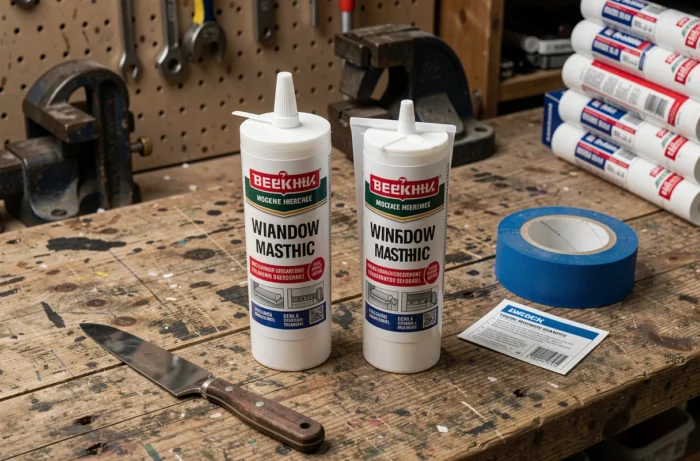
Acrylic sealant or silicone for window joints: compared properties
Acrylic sealant and silicone do not serve the same purpose on a window. Their composition determines their behavior against water, building movements, and finishing.
Acrylic sealant is paintable, making it a common choice for interior joints between the frame and the wall. It smooths easily, adheres to most porous substrates (plaster, wood, concrete), and can be cleaned with water before drying. However, its water resistance remains limited over time. Exposed to the elements, it shrinks and cracks after a few freeze-thaw cycles.
Silicone, whether neutral or acetic, offers permanent elasticity and durable water resistance. It withstands high thermal amplitudes without degrading. Its main limitation: it does not accept paint. On a facade where the joint must be covered, standard silicone is therefore unsuitable.
| Criterion | Acrylic sealant | Silicone (neutral or acetic) |
|---|---|---|
| Water resistance | Medium, deteriorates outdoors | High, stable over time |
| Elasticity | Low, hardens with age | High, remains flexible |
| Paintability | Yes | No (except hybrid) |
| Recommended window use | Interior joints, finishing | Exterior joints, glazing, caulking |
For exterior caulking between the frame and masonry, neutral silicone or hybrid MS polymer sealant remain the most reliable products.
Hybrid MS polymer sealant: the product that combines advantages
Hybrid sealants based on MS polymer (modified silicone) are increasingly common on carpentry sites. Their main advantage: they combine the elasticity of silicone with the paintability of acrylic.
A hybrid sealant adheres to damp substrates, which is a real advantage in renovations. When replacing a window in cool or humid weather, standard silicone may poorly polymerize on a wet window sill. The hybrid sealant tolerates residual moisture in the substrate without compromising adhesion.
Another benefit: hybrids do not release solvent or acetic acid during application. They are compatible with sensitive materials (polycarbonate, copper, zinc) where acetic silicone would cause corrosion or surface fogging.
- Paintable after complete drying, allowing for a finish integrated into the facade wall without a visible joint.
- Free of isocyanates, unlike polyurethane sealants, simplifying handling precautions on site.
- Applicable on damp substrates, an advantage for outdoor interventions without waiting for the substrate to dry completely.
The additional cost compared to standard silicone exists, but it remains moderate. For a standard peripheral window joint, the price difference per cartridge represents only a fraction of the total installation cost.
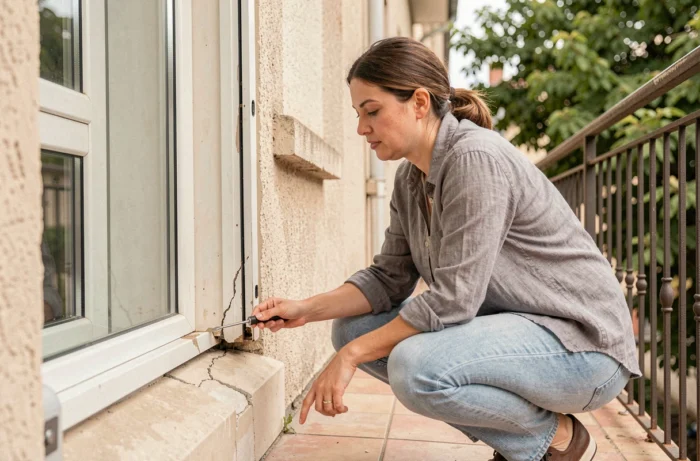
Window sealing and ten-year guarantee: what the joint commits
A poorly installed window seal or one made with an unsuitable product is not just an aesthetic defect. Defects in the airtightness of exterior joinery fall under the ten-year guarantee (article 1792 of the Civil Code) as soon as they render the premises unfit for their intended use.
A recurring water infiltration at a degraded seal joint can lead to structural damage: mold in the insulation, deterioration of the wooden frame, detachment of the interior covering. In this case, the installer’s liability is engaged for ten years.
Since the implementation of RE2020, the air tightness of joinery has become a regulatory issue, not just a comfort issue. A defective caulking joint compromises the measured energy performance of the building. Blower door tests conducted at the end of the project detect these defects, and an out-of-norm result can block the compliance of the construction.
The choice of sealing product is therefore not a matter of preference. It engages the durability of the joinery, the regulatory compliance of the building, and, for professionals, their legal responsibility. Prioritizing a certified neutral silicone for glazing, a paintable hybrid MS polymer for exterior caulking, and reserving acrylic for non-water-exposed interior finishes remains the safest distribution.