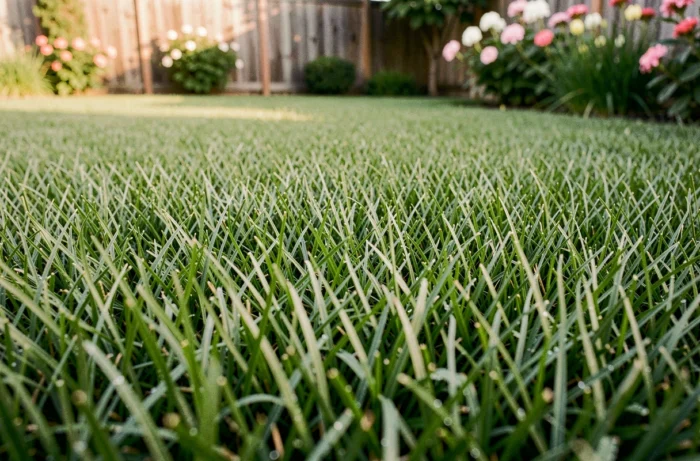
Hybrid C4 grasses utilize a four-carbon fixation cycle that provides them with a significantly higher photosynthetic yield than C3 grasses as soon as temperatures exceed the 25-30 °C threshold. Their benefits for residential lawns and professional green spaces go beyond drought resistance: it is the entire water management, fertilization, and maintenance schedule that changes.
Soil Preparation and Establishment Phase of a Hybrid C4 Lawn
A hybrid Cynodon dactylon or Paspalum does not compensate for compacted soil. We regularly observe establishment failures related to inadequate preparation, even when the sown variety is performing well.
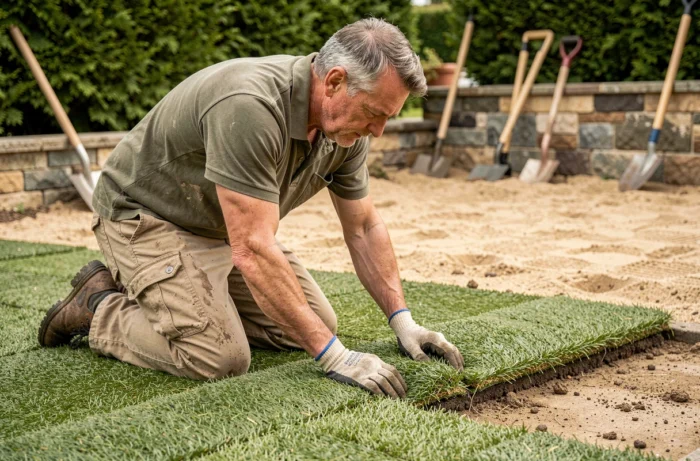
Before any sowing, the sequence is non-negotiable: deep aeration, scarification if the plot had a previous lawn, followed by compaction correction with a coarse sand addition if the soil is clayey. Compacted soil limits the penetration of water and air, which reduces rooting depth, the main mechanical advantage of C4 grasses.
The seedbed must remain constantly moist until complete germination. This requirement contradicts the image of a lawn that is immediately water-efficient. The actual water savings only manifest after the establishment phase, once the network of stolons and rhizomes is established. During this startup period, daily split watering remains the rule.
We recommend choosing hybrid C4 grass for the garden by checking varietal compatibility with your climatic zone, as not all selections of Cynodon dactylon tolerate the same winter temperature ranges.
Winter Dormancy and C3 Overseeding: The Seasonal Relay
The hybrid nature does not guarantee green coverage twelve months a year in mainland France. As soon as nighttime temperatures drop below a certain threshold, C4 grasses enter dormancy and turn yellow. This behavior is physiological, not pathological.
An autumn overseeding with a C3 grass ensures winter coverage. Perennial ryegrass or certain fine fescues, sown as a top layer in the fall, germinate quickly and take over visually during the cold season. When the heat returns, Cynodon or Zoysia resumes its growth and naturally dominates the C3 layer.
This so-called “bi-species transition” strategy is common on sports fields in Mediterranean climates. It requires a strict sowing schedule:
- C3 overseeding between mid-September and mid-October, when soil temperatures still allow for rapid germination of ryegrass.
- Low mowing of C3 in April-May to free up light for the resuming C4.
- Gradual cessation of nitrogen fertilization for C3 as soon as C4 growth becomes visible again.
Without this protocol, the lawn alternates between a yellowish C4 grass in winter and a scorched C3 in summer, which brings us back to the initial problem.
Cynodon, Zoysia, Paspalum: Technical Selection Criteria
Competitors often group these three genera under the label “C4 grass” without distinguishing their usage profiles. However, the differences are decisive for a residential lawn project.
Cynodon dactylon (Bermuda Grass) and its hybrids like the IBIZA variety offer a high colonization speed thanks to a dense network of stolons. They withstand intensive foot traffic, making them the logical choice for family gardens with children or pets. In return, their vegetative aggressiveness requires monitoring of borders and adjacent flower beds.
Zoysia is distinguished by a finer growth habit and reduced maintenance. Its slow growth limits mowing frequency but significantly extends the establishment phase. It is not a grass for the impatient: full coverage can take one to two complete seasons depending on the sowing density.
Paspalum vaginatum remains the specialist for saline soils and coastal areas. Its salt tolerance makes it relevant where sea spray or recycled water irrigation poses problems. Outside this context, it does not provide significant advantages over Cynodon.
Real Water Savings of an Established C4 Lawn
The reduction in water consumption is the main argument in favor of C4 grasses. However, it is essential to distinguish marketing claims from agronomic reality.
Water savings pertain to the active growth phase, not the entire annual cycle. During winter dormancy, consumption is zero (the grass does not grow). During the establishment phase, it is comparable to or even higher than that of a classic C3. Thus, the water savings are concentrated during the summer period, precisely when water resources are most strained.
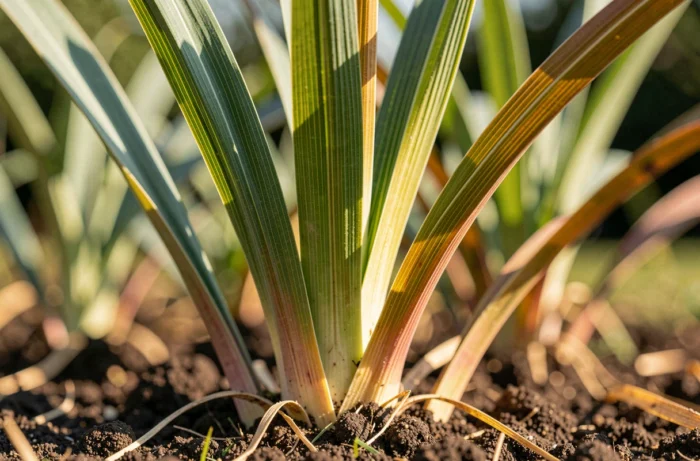
The deep rooting of C4 grasses, often much greater than that of a classic C3 lawn, allows them to access water at depths that fescues or ryegrass cannot reach. This mechanism is only effective if the soil is not compacted at depth. On a new subdivision lot where construction equipment has compacted the subsoil, even a hybrid Cynodon will struggle to send its roots down.
- Aerate the soil deeply before sowing to break up compacted layers.
- Avoid summer overwatering that keeps roots near the surface and negates the advantages of C4.
- Favor spaced but long watering sessions to encourage deep rooting.
The coverage density achieved by stolons and rhizomes also reduces direct evaporation from the soil, which indirectly contributes to the overall water retention of the plot.
A well-established hybrid C4 lawn transforms the summer management of a garden. The initial investment in soil preparation and follow-up watering during germination conditions everything else. Without this rigor at installation, the promise of drought resistance remains theoretical, regardless of the cultivar chosen.