
We regularly come across used motorcycle ads showing 20,000 km on the clock, with prices varying greatly from seller to seller. This figure, often perceived as a psychological threshold by buyers, only tells part of the story. To determine if a motorcycle with 20,000 km deserves your attention (or your suspicion), you need to cross-reference the mileage with the age of the machine, its type, and especially its maintenance history.
Normalized Annual Mileage: The True Indicator for a Used Motorcycle
Most guides simply provide an overall threshold (“beyond 30,000 km, be cautious”). This overlooks the determining factor: the relationship between mileage and the age of the motorcycle.
The Repaire des Motards calculates its used motorcycle rating assuming a well-maintained bike has traveled between 6,000 and 12,000 km per year depending on the engine size. In other words, a four-year-old motorcycle showing 20,000 km is at the lower end of the normal range. The same motorcycle with only two years of age exceeds the expected annual average.
This is why asking is 20,000 km a lot for a motorcycle only makes sense when relating this figure to the year of registration. A sportbike from 2024 with 20,000 km has been ridden hard. A touring bike from 2019 with the same mileage has barely been used.
Before looking at the price, divide the total mileage by the number of years since the first registration. If the result exceeds the upper range for the relevant engine size, expect more noticeable wear on consumables (chain, brake pads, tires) and a logically lower selling price.

Maintenance History vs. Mileage: What Really Determines Price
We often see buyers focusing on the odometer and neglecting the maintenance log. In the used market, a documented history is valued more than low mileage without proof. A motorcycle with 45,000 km and all its invoices and dealership service records often sells faster and at a better price than a 20,000 km bike with no information.
The annual maintenance cost of a motorcycle today ranges between 300 and 700 euros for regular use. This budget covers oil changes, filters, brake pads, and basic adjustments. If the seller cannot justify these expenses over the last few years, the displayed mileage loses all credibility.
What to Check First on a 20,000 km Motorcycle
- The stamped maintenance log or invoices corresponding to manufacturer revisions, with dates and mileage noted
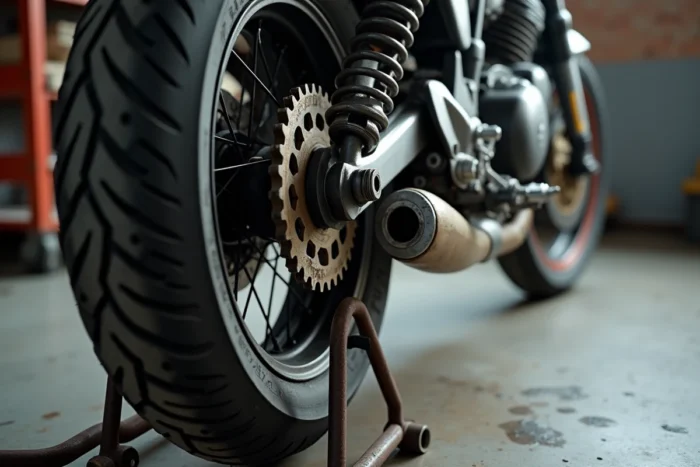
- The condition of the chain and sprockets (on a chain motorcycle): at 20,000 km, an original chain kit may be nearing the end of its life if maintenance has been neglected
- The brake pads and discs: wear depends more on riding style than mileage, but new pads on a motorcycle with 20,000 km may indicate a recent replacement or a questionable odometer
- The level and color of the brake fluid, often overlooked by individuals who do not follow the manufacturer’s schedule
Opinions vary on this point, but several mechanics recommend having a complete diagnostic done before purchase as soon as the motorcycle exceeds three years, regardless of mileage.
Sport, Touring, or Trail Motorcycle at 20,000 km: Different Observations
The type of motorcycle radically changes the interpretation of the odometer. A sportbike at 20,000 km has often been more mechanically stressed than a trail bike with the same mileage. The average engine speed, the stresses on the frame, and the suspensions differ based on usage.
On a sportbike (600 or 1000 cc), 20,000 km often involves frequent high revs, sometimes track sessions. One should check the condition of the steering bearings, the straightness of the frame, and the absence of crash marks (levers, footpegs, fairings).
On a touring or trail bike, 20,000 km represents barely completed break-in. These machines are designed to last well beyond, with engines commonly reaching 100,000 km when properly maintained. The 100,000 km mark is generally considered the threshold at which a motorcycle has “been ridden a lot”.
Special Case of Small Displacements and Scooters
On a 125 cc or urban scooter, 20,000 km carries more weight. Small single-cylinder engines run at higher RPMs to maintain speed, which accelerates internal wear. On a 125, 20,000 km equates to much more engine stress than on a 500 twin.
Negotiating the Price of a Used Motorcycle Based on Mileage
Mileage remains a negotiation lever, but not in the way one might think. A seller who lists 20,000 km without any maintenance justification faces a greater depreciation than a transparent seller at 40,000 km.
To assess the price, compare the ad to published ratings (Le Repaire des Motards, La Centrale) ensuring that the model, year, and mileage match. A discrepancy of more than a few thousand kilometers compared to the expected annual average justifies a discount.
- Mileage below the annual average with proven maintenance: price close to the rating, little room for negotiation
- Mileage within the average but without a history: depreciation of several hundred euros, to negotiate based on parts to be replaced
- Mileage above the average or intensive use (delivery, school): negotiate by estimating the revisions to be expected before riding with peace of mind
The motorcycle technical inspection, which is becoming clearer for upcoming regulatory deadlines, could ultimately make these checks more transparent. In the meantime, it is up to the buyer to do the work.
A used motorcycle with 20,000 km is neither a good nor a bad deal by default. The figure on the odometer is only valuable when considered alongside the model year, the type of machine, and a readable maintenance log. Without these elements, even 5,000 km can hide surprises.