
You are running with shoes that are too heavy, lifting a bar with a diameter that doesn’t suit your hands, or pedaling on a poorly adjusted bike. The result is the same: premature fatigue, compensatory movements, and slow progress. Choosing the right sports equipment is not just about comparing prices. It’s primarily about understanding how each piece of equipment interacts with your body, your space, and your practice.
Running and sports shoes: the first equipment that changes everything
Before talking about machines or accessories, look at your feet. The shoe is the point of contact between your body and the ground. A poor choice at this level affects the ankles, knees, and back.
Have you ever noticed uneven wear under your soles? This detail reveals your type of stride: pronated, supinated, or neutral. The stride determines the appropriate shoe model. A pronated runner wearing neutral shoes overloads the inside of the knee with each impact.
For running, prioritize cushioning that suits the frequency of your training. An occasional runner does not need the same level of absorption as a regular practitioner. The weight of the shoe directly influences energy expenditure over long distances. For weight training, a flat and firm sole ensures better stability during squats or deadlifts.
To deepen your research, you can consult the equipment on Va Y Avoir Du Sport which details the categories of equipment by discipline.
Housing constraints: ceiling height, flooring, and noise
Most guides focus on your goals (cardio, weight training, weight loss) without ever addressing a factor that conditions the safety and durability of your equipment: the compatibility between the equipment and your housing.
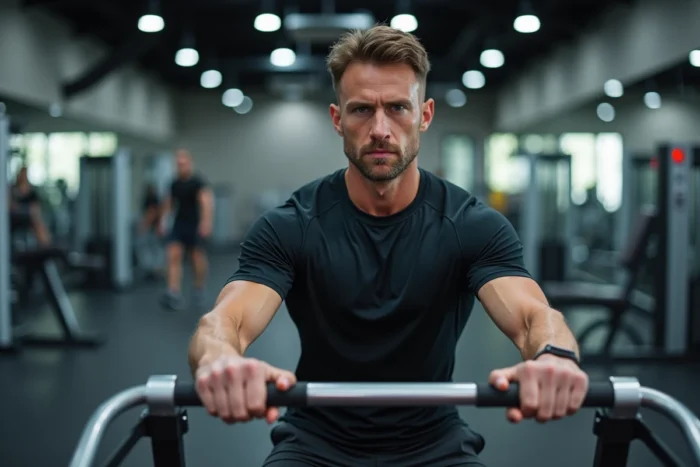
A treadmill often weighs between 90 and 135 kg. Placed on an old floating floor on the third floor, it can cause annoying vibrations for your neighbors and weaken the floor. Check the strength of your floor before any purchase.
Ceiling height is another common trap. For a treadmill, count on a minimum of about 2.40 m of free height, adding your height and a comfort margin. An elliptical bike also requires sufficient clearance above the head when the pedals reach their highest point.
Also think about ventilation. A motorized device like a treadmill generates heat. Without sufficient airflow, the motor overheats and its lifespan decreases. A simple fan directed at the base of the machine can solve the problem.
Noise and neighbors
Exercises with free weights (dumbbells, bars) generate impacts on the ground. A rubber protection mat absorbs shocks and reduces transmitted noise. This small investment avoids neighbor conflicts and protects your flooring.
Bars, dumbbells, and weights: choose based on the movement, not the budget
In weight training, the Olympic bar and the standard bar do not serve the same purpose. The difference lies in the diameter, the empty weight, and the ability of the sleeves to rotate.
- The Olympic bar (wider sleeve diameter) rotates freely, reducing strain on the wrists during fast movements like the clean and jerk.
- The standard bar is suitable for slow and controlled exercises (curl, bench press) for a beginner or intermediate practitioner.
- Adjustable dumbbells allow for varying weights without cluttering the space, a notable advantage for home training.
A versatile dumbbell set covers the majority of weight training exercises for a beginner. It’s better to have a set of adjustable weights than a collection of machines that only work one muscle group.
Pull-up bars and complementary accessories
A pull-up bar fixed in a door frame offers a remarkable space/efficiency ratio. It engages the back, arms, and abdominal strap. Check that the door frame can support the load (your weight plus dynamic jolts). Models fixed with screws are more stable than those using pressure.
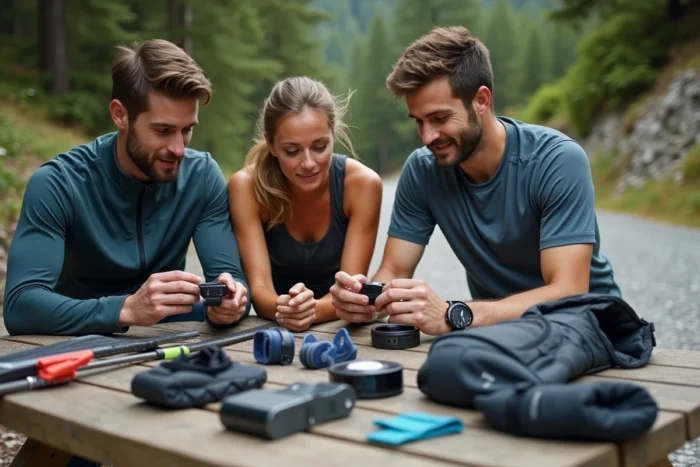
Connected equipment and training tracking: what really helps
Watches and tracking sensors have become more accurate and affordable. They measure heart rate, time under tension, speed, and other useful parameters to adjust the intensity of your sessions.
Why does this tracking make a difference? Because progress requires increasing the load or intensity at the right time. Without reliable data, you risk stagnating by staying in your comfort zone or injuring yourself by pushing too hard too soon.
Connected coaching platforms go further. They analyze your sessions and offer personalized adjustments. A sensor on a tennis racket measures the speed of the strike and the angle of the wrist. A sensor on a bike calculates the power developed with each pedal stroke.
The real usefulness depends on your discipline and level. A beginner in fitness will benefit more from a simple heart rate monitor than from a biomechanical analysis platform. Choose the level of technology suited to your current practice, not the one you imagine in six months.
Criteria for choosing durable sports equipment
Before finalizing a purchase, scrutinize each piece of equipment against these practical criteria:
- Versatility: a device that allows multiple exercises (elliptical bike, adjustable weight bench) makes better use of the investment than a single-function device.
- Ease of use: test the ergonomics before buying. An uncomfortable bike saddle or handles that are too thin will discourage you within weeks.
- Quality of construction: welds, cable coating, smoothness of movements. Cheap equipment that squeaks after three months ends up in the garage.
- Size and storage: foldable or modular models are suitable for small spaces, provided the folding mechanism is robust.
The best sports equipment is the one you use regularly. A high-end device that collects dust is worth less than simple equipment well-suited to your space and level. Focus your budget on the pieces in direct contact with your body (shoes, seating, handles) and accept compromises on aesthetics or secondary functions.