More than half of the French believe that getting treated abroad can be a response to the rising cost of dental care. Dental tourism is not just about comparing prices between countries: the choice of a clinic is based on specific technical criteria, often difficult to assess from a distance. Some of these criteria, however crucial for patient safety, are absent from most guides available online.
3D Imaging and Digital Planning: The First Technical Filter
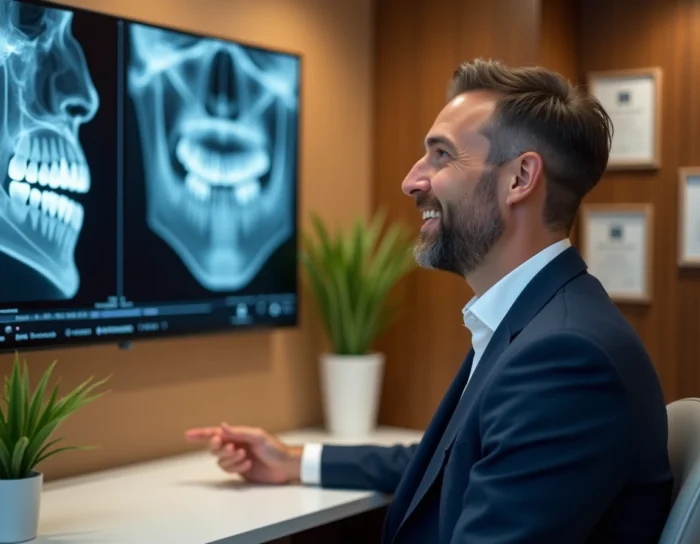
Before comparing prices or destinations, one criterion should precede all others: does the clinic have its own on-site CBCT (cone beam) imaging equipment and 3D planning? The absence of CBCT increases the risk of complications, including nerve injuries and implant positioning errors.
Some clinics outsource imaging to external centers, which prolongs delays, fragments the medical file, and reduces the practitioner’s ability to adjust the treatment plan in real-time. When requesting a quote, ask the question directly: is the CBCT examination performed at the clinic or outsourced?
This technical point allows for a quick elimination of facilities that operate with minimal technical platforms. Identifying the best dental clinics abroad starts with this material verification, before any consideration of price or location.
Online Patient Reviews: How to Spot Manipulation Signals
Specialized platforms like WhatClinic or DentalDepartures do not function as mere directories. They filter dental clinics based on documented criteria (licenses, spoken languages, types of equipment) and aggregate verified reviews with history.
This historical dimension is an underutilized detection tool. An establishment that suddenly accumulates dozens of positive reviews in a few weeks, coming from accounts without history, presents a clear warning signal. Conversely, a clinic with regular reviews over several years, including some mixed feedback publicly addressed, offers a much more reliable profile.
Criteria to Check in Reviews
- The regularity of publication: spaced reviews over several months or years are worth more than a sudden spike of glowing comments
- The presence of clinic responses to negative reviews, showing active patient follow-up management
- The level of detail in testimonials: a review mentioning the type of care, length of stay, and post-operative follow-up weighs more than a simple “very satisfied”
Some platforms now publish rankings by specialty (implantology, aesthetics, conservative care) with continuously updated data. This sorting by specific competence is more useful than a generic ranking by country.
Cross-Border Post-Operative Follow-Up: The Weak Point of Dental Tourism
Most comparisons between destinations focus on the stay itself: price of the procedure, quality of service, equipment. The follow-up after returning to France remains the weak link in the system, and feedback on this point varies.
A dental implant requires several months of healing. During this period, complications can arise: infection, rejection, occlusion problems. The follow-up protocol must be defined before departure, not improvised upon return.
Three questions deserve a written response from the clinic before committing:
- What is the protocol in case of complications after returning? Does the clinic cover a new trip or collaborate with a partner practitioner in France?
- Are the operative reports and X-rays provided in a format usable by a French dentist?
- Is there a written guarantee on the prosthetics and implants, and what is its effective duration?
Without clear answers to these questions, the price differential loses some of its appeal if a follow-up treatment in France becomes necessary at full price.

Regulatory Framework and Reimbursement: What Social Security Actually Covers
Dental care performed in a European Union country can be reimbursed by French Social Security, based on French rates. The process involves providing a detailed translated invoice and payment receipts to the CPAM upon return.
In contrast, for care performed outside the EU (Turkey, Thailand, Mexico), reimbursement is not guaranteed. It depends on the existence of a bilateral agreement between France and the country in question, and the amounts reimbursed often remain very low.
The choice of destination thus has a direct impact on the actual out-of-pocket expenses. A cheaper treatment outside the EU can end up costing more if no reimbursement is applicable. Hungary, Romania, and Bulgaria maintain a structural advantage for French patients: significantly lower rates than those practiced in France, combined with Social Security coverage identical to that of care performed on national territory.
Price Transparency and Detailed Quotes: Traps to Avoid
A serious dental quote, whether from Budapest or Bucharest, must detail each procedure separately: extraction, bone graft if necessary, implant, abutment, temporary crown, permanent crown. A global price without itemization prevents any reliable comparison.
Clinics that practice price transparency also indicate the brand and range of implants used. An implant from a recognized brand (the context mentions that some platforms allow comparison of this data) does not offer the same guarantees as a generic implant without traceability.
Always request a detailed quote before the first appointment, and check that the final amount includes on-site follow-up consultations. Some facilities advertise an attractive price for the main procedure, then charge separately for each consultation, X-ray, or adjustment.
Dental tourism works for patients who verify the technical platform, follow-up protocol, and cost breakdown before booking a flight. Real savings exist, provided that the choice of a clinic is not reduced to a simple price comparison between countries.