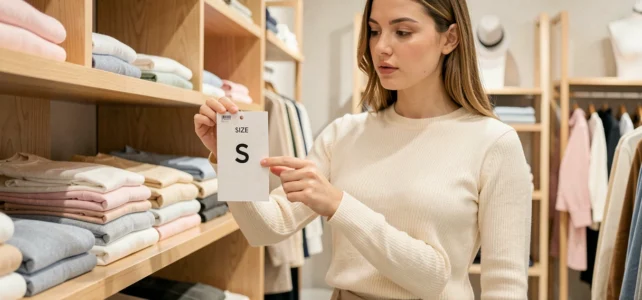
An online-ordered t-shirt arrives too tight, even though the label clearly states “S”. The problem doesn’t stem from your body shape, but from the fact that the letter S does not designate a fixed measurement. Depending on the brand, the country of manufacture, or the type of clothing, this letter covers very different centimeters. Understanding what lies behind this label can help avoid returns and save time with each purchase.
Why an S doesn’t measure the same everywhere
The letters XS, S, M, L were created to simplify the choice. But they are not based on any single international standard. Each brand defines its own size charts, and an S can vary by several centimeters from one manufacturer to another.
Nike, for example, publishes separate charts for its men’s unisex, women’s unisex, boys, and girls lines. An “S” in the men’s range does not correspond at all to the “S” in the women’s range. Other brands like s.Oliver or All’Océan adjust their charts according to the cut (fitted, straight, oversized) and the fabric material.
The result: two tops labeled S purchased from two different retailers can show a notable difference in bust measurement or body length. To fully understand the size S correspondences, one must look beyond the letter and rely on the centimeters indicated in each brand’s guide.
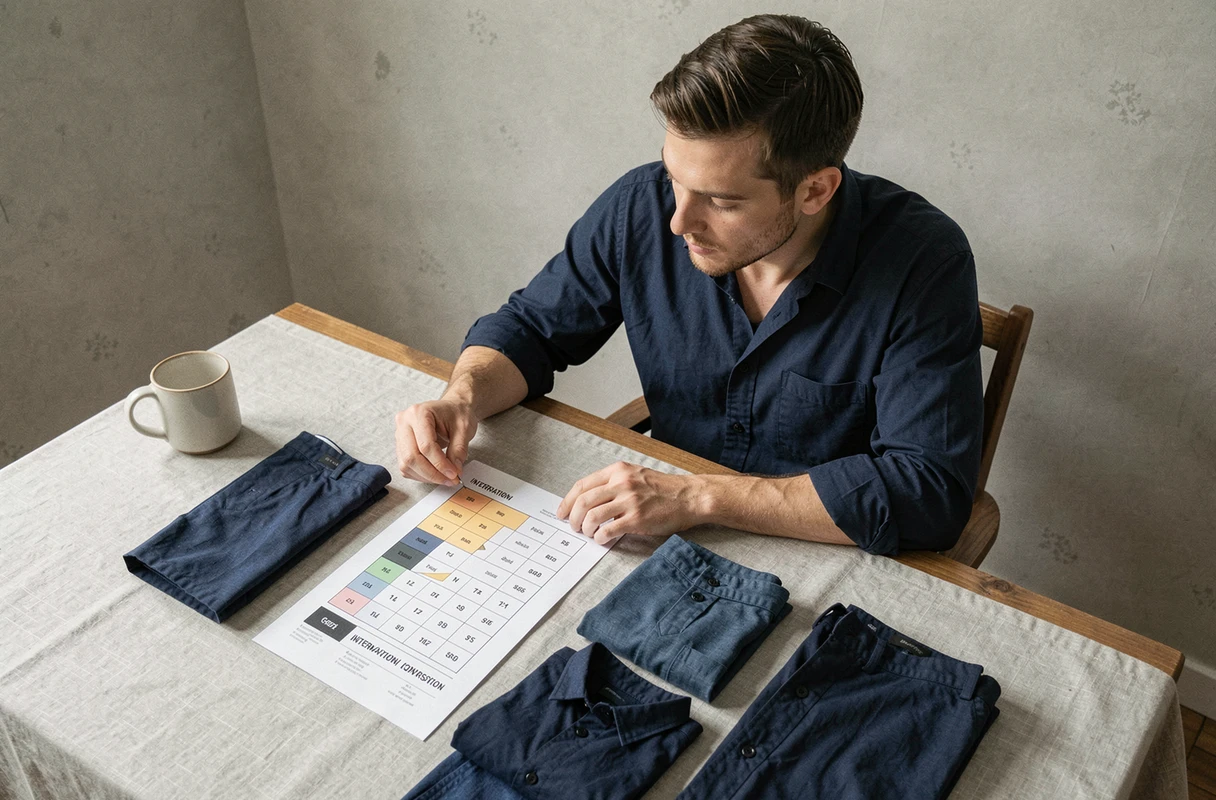
Bust, waist, and hips: the measurements that really matter
Have you ever noticed that an online size guide asks for three or four body measurements? This is not a whim. The bust, waist, and hip measurements are the only reliable benchmarks for choosing the right size, regardless of the country or brand.
How to take your measurements correctly
Use a flexible measuring tape, directly on the skin or over a thin undergarment. Here are the three measurements to take:
- Bust: place the tape under the armpits, around the fullest part of the bust, keeping your back straight without puffing out your chest.
- Waist: measure at the narrowest part of the torso, usually around the navel or slightly above.
- Hips: place the tape at the widest part of the hips, encompassing the buttocks.
Note these numbers and compare them to the brand’s chart before each order. A difference of two to three centimeters can shift you from S to M, depending on the chosen cut.
How cut and material change things
A stretchy jersey t-shirt cut in S will fit a wider range of measurements than a rigid poplin shirt. The knit stretches, while the woven fabric does not. This is why some brands recommend measuring on bare skin with very little ease for stretch garments and adding one or two centimeters of ease for structured pieces.
Size S correspondence between French, European, and American systems
The real puzzle arises when buying abroad or on a site that uses a different reference system. In France, a size S for women generally corresponds to sizes 36 and 38. For men, it often aligns with 46 or 48 in European sizing.
In the United States, the system is different: women’s sizes use even numbers (4, 6, 8) and men’s sizes use inches or numbers specific to the American market. An American women’s S often equates to a 4 or 6 US, which means nothing without knowing the associated centimeters.
In the UK, a women’s size S is around 8 or 10 UK. In Italy, the system uses higher numbers (40 or 42 for a women’s S). These numbering discrepancies create understandable confusion, but the principle remains the same: the letter translates to a range of measurements, not a universal number.
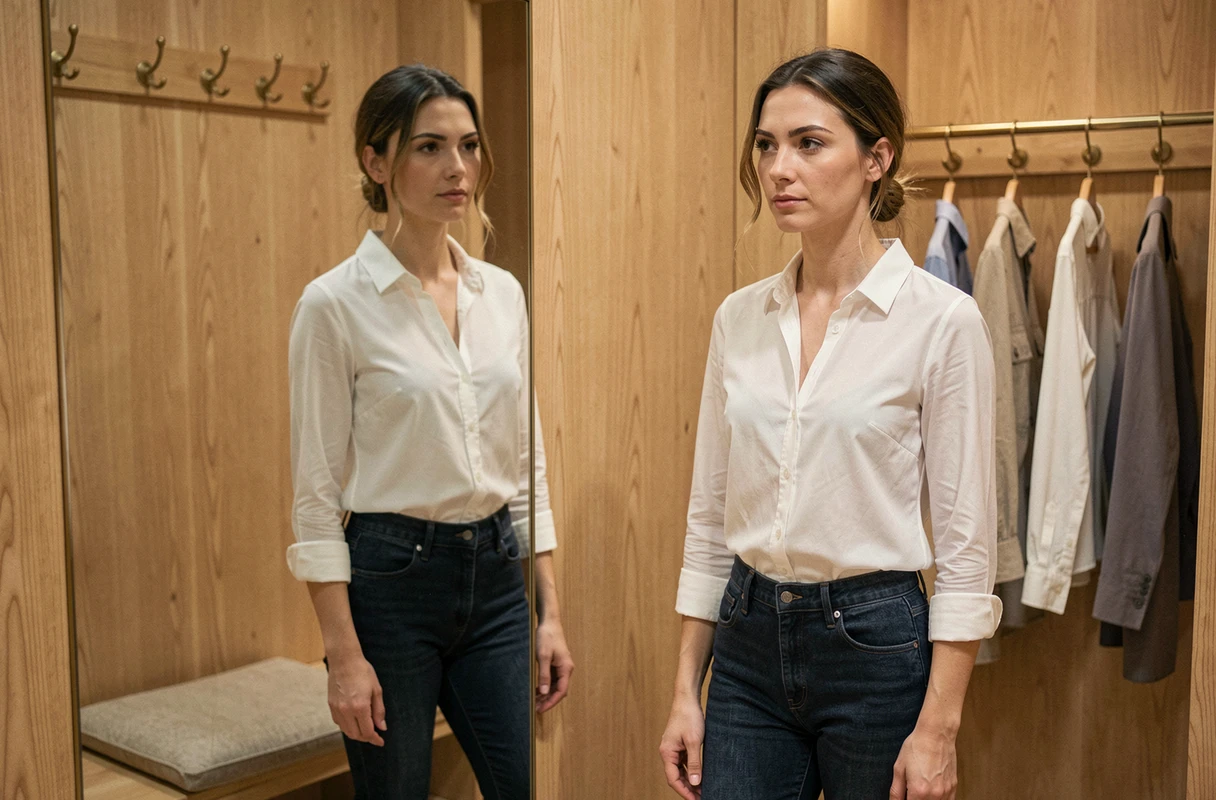
Buying online without making a size mistake
Returns due to incorrect size choices account for a significant portion of returns in textile e-commerce. A few simple reflexes can help reduce this risk.
Always check the brand’s size guide, even if you think you know your usual size. An S at Promod does not necessarily cover the same centimeters as an S at New Balance or Uniqlo.
Also, look at customer reviews that mention size. Comments like “runs small, take a size up” often carry more weight than an official chart, as they reflect the garment actually worn.
Take your measurements at least once a season. Bodies change, and the memory of the last successful purchase can mislead six months later. Keeping your measurements updated avoids most ordering errors.
- Check if the guide distinguishes between fitted and regular cuts: a regular S may correspond to a fitted M.
- Compare your measurements in centimeters, not the displayed letter.
- If in doubt between two sizes, opt for the larger one for non-stretch fabrics.
The letter S remains a useful reference in daily life, as long as it is not considered an absolute value. Your centimeters are your true size, the letter is just an approximate translation that varies from one brand to another. Keeping a measuring tape in a drawer and checking each brand’s guide before finalizing a cart is the safest way to buy a garment that fits well the first time.