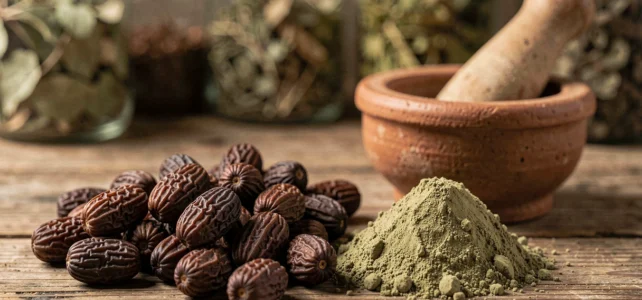
Haritaki (Terminalia chebula) concentrates a notable amount of hydrolysable tannins and gallic acid. These compounds explain both its digestive activity and its ability to cause marked adverse effects when the dosage or quality of the product goes awry. Before incorporating this Ayurvedic plant into a protocol, several technical points deserve particular attention.
Contaminants and Quality of Haritaki Batches Sold Online
The majority of incidents related to Ayurvedic supplements do not stem from the active ingredient itself, but from the batch. Haritaki in powder or capsule form purchased from marketplaces often escapes the controls applied to European pharmaceutical circuits.
We observe several recurring risk markers on products available online:
- Absence of heavy metal analysis certificate: lead, mercury, and arsenic are common contaminants in plant powders imported from South Asia. A reliable supplier publishes a certificate for each batch, not a generic document.
- Vague mention of botanical origin: a product labeled “haritaki” without specifying the species Terminalia chebula or the part used (fruit, pericarp) leaves doubt about the actual composition.
- Non-standardized active ingredient dosage: without titration for gallic acid or tannins, the concentration varies from batch to batch, making any dosage random.
- Organic labels without identifiable certifying body: an “organic” logo affixed without a European certification number (FR-BIO-XX or equivalent) guarantees nothing.
An article detailing the dangers of haritaki revisits the specific risks associated with consuming uncontrolled products. The reflex to adopt remains to systematically request the analysis report of the batch before any order.

Digestive Adverse Effects of Haritaki: Mechanisms and Thresholds
Diarrhea and abdominal cramps are the most consistent safety signals reported with haritaki. This is not a marginal effect: the richness in tannins of the fruit stimulates intestinal peristalsis in a dose-dependent manner.
At moderate doses, this laxative effect is precisely what Ayurvedic tradition seeks to support transit. The problem arises when the dose increases or when intake continues without interruption.
Dehydration and Electrolyte Loss
Repeated diarrheal episodes lead to water loss and a depletion of potassium, sodium, and magnesium. In a person on diuretics or antihypertensive treatment, this depletion worsens the existing electrolyte imbalance. We recommend monitoring any signs of abnormal fatigue, muscle cramps, or dizziness during the first days of intake.
Nausea at the Start of Treatment
Nausea occurs especially on an empty stomach, when tannins come into direct contact with the gastric mucosa without food buffering. Taking haritaki during a meal significantly reduces this discomfort.
Technical Contraindications of Terminalia chebula
Some populations should avoid haritaki due to insufficient safety data. This is not a rhetorical precaution: no controlled clinical trial documents the safety of haritaki in pregnant or breastfeeding women.
- Pregnancy and breastfeeding: the stimulating effect on peristalsis could theoretically provoke uterine contractions. The absence of human data prohibits any recommendation.
- Children under 12 years: the hepatic metabolism of tannins in children differs from that in adults. Without validated pediatric dosing, the risk of accumulation exists.
- Chronic liver or kidney diseases: hydrolysable tannins are metabolized by the liver and eliminated by the kidneys. Insufficiency in either of these organs alters pharmacokinetics in unpredictable ways.
- Scheduled surgery: the suspected anti-platelet activity of haritaki justifies stopping it at least two weeks before an intervention.
Drug Interactions to Check Before Starting Haritaki Treatment
The phytochemical profile of Terminalia chebula – tannins, flavonoids, chebulinic acid – suggests several pharmacokinetic interactions that we must anticipate.
Tannins chelate metal ions and certain drug molecules in the digestive tract. In practice, taking haritaki simultaneously with an iron supplement, a fluoroquinolone antibiotic, or tetracyclines can significantly reduce their absorption clinically. An interval of at least two hours between doses limits this risk.
Hypoglycemic and Oral Antidiabetic Agents
Haritaki has documented hypoglycemic activity in Ayurvedic pharmacopoeia. When combined with metformin or a sulfonylurea, it can potentiate the decrease in blood sugar. Any diabetic patient on treatment should consult their doctor before adding this plant to their protocol.
Anticoagulants and Antiplatelet Agents
The combination with warfarin or aspirin potentially increases the risk of bleeding. Monitoring of INR is necessary if concurrent use is maintained.

Criteria for Choosing Quality Haritaki in Powder or Capsule Form
The price per kilo varies significantly from one supplier to another, and the lower range rarely corresponds to a controlled product. A few criteria allow for quick sorting.
A reliable product displays a titration for gallic acid or total tannins on the label or technical sheet. This titration proves that the manufacturer has analyzed the active content of the batch, not just its weight. Traceability of the fruit to the harvest area (India, Nepal, Sri Lanka) serves as an additional indicator of seriousness.
European organic certifications (AB, Ecocert, Bureau Veritas) provide a guarantee of the absence of pesticides but do not cover contamination by heavy metals. Only independent testing per batch, conducted by a third-party laboratory, fills this gap.
The choice between powder and capsules depends on usage: powder allows for fine dosage adjustment, while capsules offer better gastric tolerance due to the coating that delays the release of tannins. In both cases, prior medical advice remains the only truly protective precaution for anyone undergoing treatment or with digestive fragility.